New York School of Interior Design Scholarship
June 17, 2021
DLFNY believes in the power of education. We were proud to contribute a $10,000 scholarship to the New York School of Interior Design for students in the Master of Professional Studies in Lighting Design program for the 2020-2021 school year.
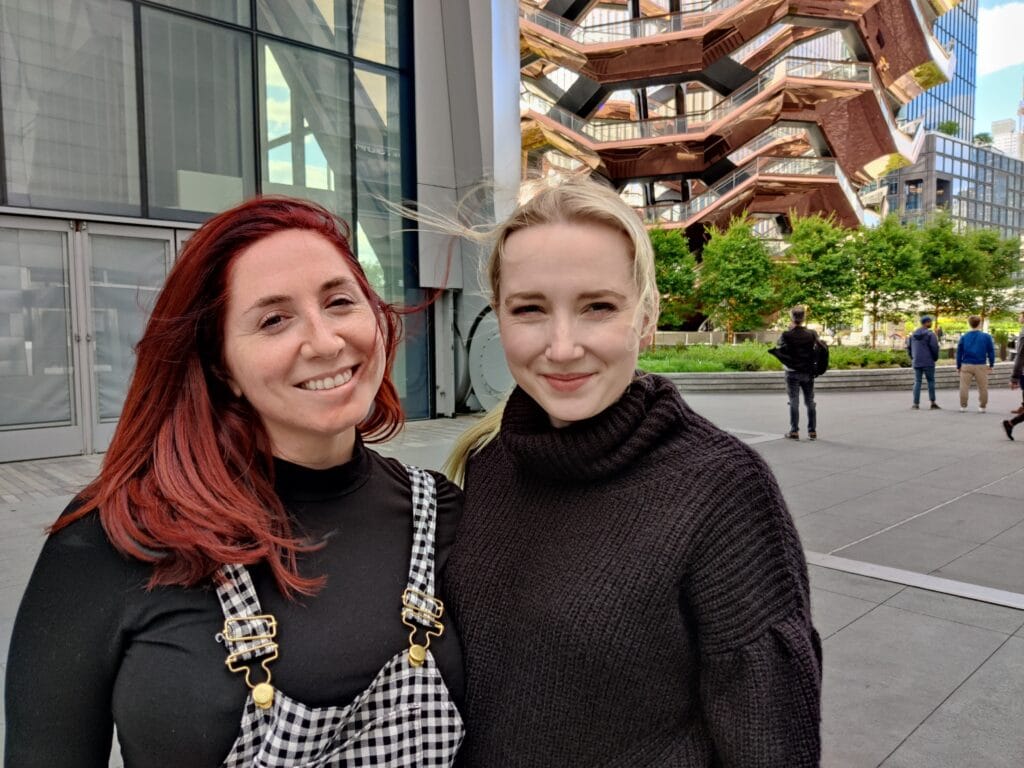
We had a chance to talk with the program director, Shaun Fillion, LC MIES, and the two scholarship recipients, Amanda Brennan and Olivia King, to discuss the importance of this opportunity. Fillion is an award-winning lighting designer and educator, and is also the Lighting Studio Manager at RAB Lighting.
Fillion emphasized that there is no other opportunity like this one. NYSID is a private institution that does not have the endowment that many other schools have. With increased enrollment during the pandemic and a heightened need for financial support, the DLFNY scholarship was a timely resource.
One of the goals of the program is to drive awareness to the lighting design industry. Fillion showcases the program at LEDucation, the DLFNY’s annual trade show. For about five years, NYSID has had a booth where students show off their portfolios. As the program director, Fillion often finds interest from associate level professionals looking to specialize their careers. The program accepts a diverse set of industry professionals with 25% of the enrollment coming from architects, 25% interior designers, 25% theatrical lighting designers, and 25% from other fields such as fine artists, robotics engineers, and industrial designers.
As the program expands to students across the country, New York City remains at the heart of the educational experience. The city immerses students in a host of historical and modern lighting application designs, not to mention the great networking opportunities that the NYC area presents. We look forward to seeing what the graduates of the program accomplish in the field. And we would like to extend a special congratulations to this year’s scholarship awardees, Amanda Brennen and Olivia King. Read what they had to say about the program and what they find most compelling about lighting design.
DLF: Tell us about yourself and your career path thus far.
AB: I originally got into the design field because I love architecture and history; it always fascinated me how old buildings can stand the test of time. I studied interior architecture and found myself loving everything about this industry for many years, until my light dimmed inside me. I was lost, and tired of working insane hours to meet my deadlines. Then I found architectural lighting, it’s a role I came into while seeking to expand my understanding about the nature of light and lighting.
OK: I knew I wanted to be a designer from a young age. While others played with Barbies, I designed their houses. My earliest childhood memories are of crafting models from shoe boxes. I realized my interest in sculpting space early on.
I received my undergraduate degree from Georgia Tech in architecture. I enjoyed the challenges and technical applications of weaving art and science. During my junior year, I was accepted to a cross-registration program with SCAD (Savannah College of Art and Design) in Atlanta. This program allowed me to simultaneously take coursework at both schools in interior design and architecture. It was during this time that I felt a connection and drive to focus my career on interior design. I enjoyed the narrative storytelling in the design process and the intimate scale of interior detailing – weaving concepts from big ideas through the smallest design elements.
Over the past 6 years, I worked and learned from one of the world’s largest design firms. As part of my role as an interior designer, I worked closely with lighting designers to define lighting concepts and direction. Hotels, Restaurants, Retail, Public Space, and Workspace – each project type approaches lighting with a unique perspective.
With experience across many projects, I realized my passion to further pursue hospitality-focused work—projects that embrace theatricality, provide moments of escape and wonderment, and become backdrops for guests and friends to share experiences and create memories. I like to consider myself a set designer—and like theatre, lighting is the critical element to bring life to the stage.
Recently, I accepted a position with Rockwell Group in Manhattan. With a focus on hospitality work, I am eager to continue designing experiential spaces—now with a lens of light.
DLF: Why did you apply to the NYSID’s Master of Professional Studies in Lighting Design program?
AB: I have worked in the architectural lighting world for 3 years and found myself wanting the creditably that a degree gives. I also found myself looking to connect with other lighting designers and experience how to illuminate a space in different ways. Lighting is a field that is dramatically changing due to technology, so having professors that want to share their knowledge is so important to me.
OK: After working with several talented lighting designers in Manhattan, I quickly realized how little I knew about lighting. While I experienced how light transforms spaces and brings them alive, l lacked the knowledge to fully grasp the boundaries or opportunities lighting creates. I applied so I could learn how to harness this power of light, whether collaborating with colleagues or designing projects on my own.
DLF: What has receiving the DLFNY scholarship meant to you?
AB: It has allowed me to further educate myself which then allows me to share my knowledge with others.
OK: I am greatly honored to be a recipient of the DLFNY scholarship and to be recognized for my achievements and accomplishments in my career thus far.
Hearing I received the scholarship at the start of NYSID’s lighting program gave me a great sense of confidence entering a program I had little experience in.
DLF: Through your studies or personal endeavors, what have you found most compelling about lighting design?
AB: Architectural lighting isn’t just about adding fixtures into the ceiling, it’s about evoking emotion.
OK: Lighting requires a perfect balance of art and science. Not only must lighting enhance the design, but it must also provide critical function. The more I learn, the more I realize the depth of expertise required to execute successful projects across many disciplines.
The ability for light to influence appearance and emotions is particularly interesting to me. The way lighting—or the lack of lighting—manipulates spaces and the perception of users is very powerful.